
Application and Prospect of Pesticide Emulsifier Monomers
As is well known, emulsifiers are widely used and are no exception in the field of pesticides. Today, the editor will take you to understand the application and prospects of emulsifiers in the field of pesticides:
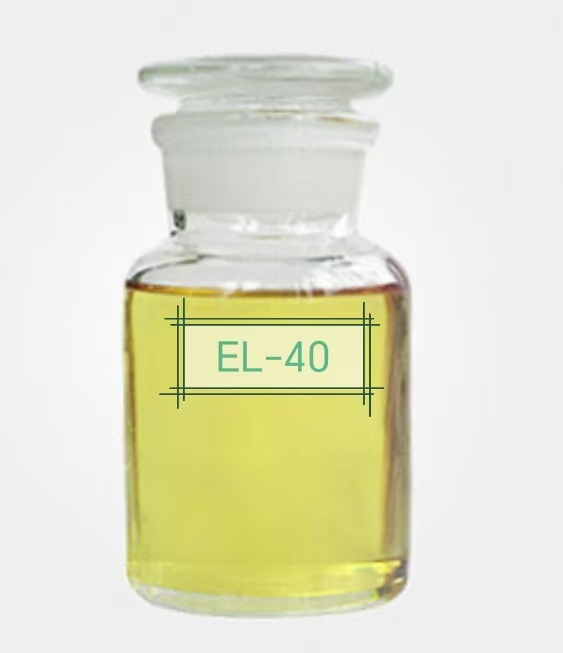
Emulsifier is one of the essential components in formulating pesticide emulsion formulations. Its main function is to impart necessary surface activity to the emulsion, allowing it to be evenly dispersed in water with extremely small oil droplets, forming a relatively stable emulsion. The emulsifiers used for preparing emulsions are mainly a mixture of non-ionic and anionic types. Emulsifiers are generally selected based on their emulsifying properties and effects on pesticide formulations. The commonly used emulsifiers are: fatty alcohol polyoxyethylene ether, styrene phenol polyoxyethylene ether, alkyl phenol polyoxyethylene ether sulfosuccinate, nonylphenol polyoxyethylene ether, castor oil polyoxyethylene ether, fatty acid polyoxyethylene ester, alkyl aryl sulfonate, These compounded emulsifiers all have good emulsifying properties, and the lotion produced by them is relatively stable.
The quality of pesticide formulations and preparations is the key factor to determine the value and effect of pesticide products. Over the past decades, various field efficacy results have shown that by adding appropriate emulsifiers, their wetting, distribution, dispersion, retention and permeability can be significantly improved, spray solution drift with the wind (air flow) can be reduced, and damage to adjacent sensitive crops can be prevented or mitigated, which is conducive to the spread and adhesion of the solution on the leaf surface, reducing the decomposition of effective ingredients in pesticide preparations by ultraviolet light, so as to improve biological activity, significantly reduce the amount of effective ingredients in pesticides, reduce costs, and protect the ecological environment. On the other hand, by changing the emulsifier variety to improve the physical properties of the raw material, resistance can be delayed, and the lifespan of hard-earned pesticide varieties can be extended, enabling them to better exert their efficacy.
Common emulsifier monomers for pesticides include the following:
300 # (Pesticide Emulsifier 300 #): Chemical name and composition: Dibenzyl diphenyl polyoxyethylene ether nonionic emulsifier. Mix with other emulsifiers to form a mixed plastic emulsifier. Used for various organochlorine, organophosphorus insecticides and herbicides.
500 # (Pesticide Emulsifier 500 #): Often used in combination with non-ionic surfactants Nongjiu 300 #, 700 #, etc., it is used as an emulsifier for most organic phosphorus insecticides, herbicides, and fungicides, such as blending 1605, Suhua 203, dichlorvos, phoxim, parathion, fenugreek, moths, methyl parathion, etc.
600 # (Emulsionante de plaguicidas 600 #): Un emulsionante mixto elaborado mediante la combinación de éter de fenil polioxietileno a base de estireno con Nongjiu 500 # y 700 # puede reducir considerablemente la cantidad de emulsionante utilizado y los costos de los plaguicidas.
700 # (Emulsionante de plaguicidas 700 #): Resina de alquilfenol formaldehído, éter de polioxietileno, emulsionante no iónico y agente humectante, adecuado para plaguicidas orgánicos clorados y orgánicos fosforados como ajustadores del rendimiento de la emulsión, y es un monómero específico para emulsionantes de herbicidas.
Los monómeros emulsionantes mencionados anteriormente desempeñan un papel importante en las formulaciones de plaguicidas al reducir la tensión superficial, lo que permite que los ingredientes activos de los plaguicidas se dispersen uniformemente en agua o aceite, mejorando así la utilización y la eficacia de control de los plaguicidas.